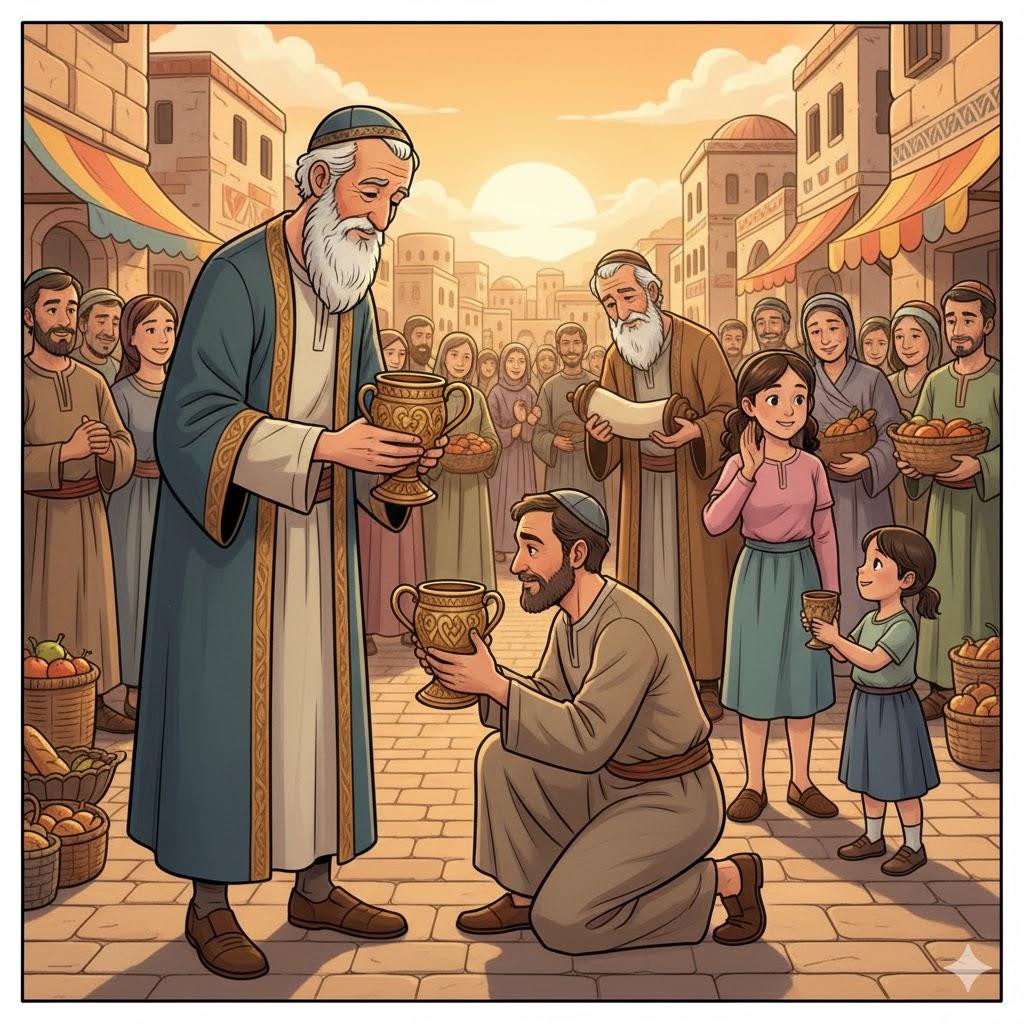
One does not refuse a greater person; one refuses a lesser, but not a greater
Etiquette dictates that one should not refuse the request of a person of higher stature.
("And he urged them greatly—Rabbi Elazar said: from here we learn that one refuses a lesser, but not a greater"—Bava Metzia 87a; also: "A gift of affection I give you. Will you accept it from me? The boy hesitated and said: one does not refuse a greater. The minister bent down and kissed his face: May you live long to serve your people"—Y. Burla, Longings, p. 47; also: "But one refuses a lesser, and not a greater, he entered, blessed him and said: Peace be upon you, my teacher and master"—Mordechai ben Yehezkel, Book of Stories IV, The Lost Object, p. 214)
Translation
Expression (Hebrew)
אֵין מְסָרְבִים לַגָּדוֹל, מְסָרְבִים לַקָּטָן וְאֵין מְסָרְבִים לַגָּדוֹל
Definition (Hebrew)
הַנִּימוּס מְחַיֵּב שֶׁאֵין לְסָרֵב לְבַקָּשָׁתוֹ שֶׁל אָדָם גָּדוֹל.
("וַיִּפְצַר בָּם מְאֹד-אָמַר רַבִּי אֶלְעָזָר: מִכָּאן שֶׁמְּסָרְבִין לַקָּטָן וְאֵין מסרבין לִגְדֹּל"- בַּבָּא מציעא פָּז ע"א, וְכֵן:"תשורה מֵחִבָּה אֲנִי נוֹתֵן לְךָ. הִתְקַבֵּל מִדַּי? היסס הַנַּעַר וְאָמַר: אֵין מסרבין לִגְדֹּל. הִתְכּוֹפֵף הַשַּׂר ונשק לוֹ בְּפָנָיו: תְּחַיֶּה ותאריך יָמִים להטריך ולעמך"- י.בורלא/ כיסופים,47,וְכֵן:"אַךְ מסרבין לַקָּטָן וְאֵין מסרבין לִגְדֹּל, נִכְנַס אֶצְלוֹ, בִּרְכּוֹ וְאָמַר, שָׁלוֹם עָלֶיךָ רַבִּי ומורי"- מָרְדְּכַי בֶּן יְחֶזְקֵאל/ סַפָּר המעשיות חֵלֶק רְבִיעִי, הַשַּׁבָּת אֲבֵדָה, 214)