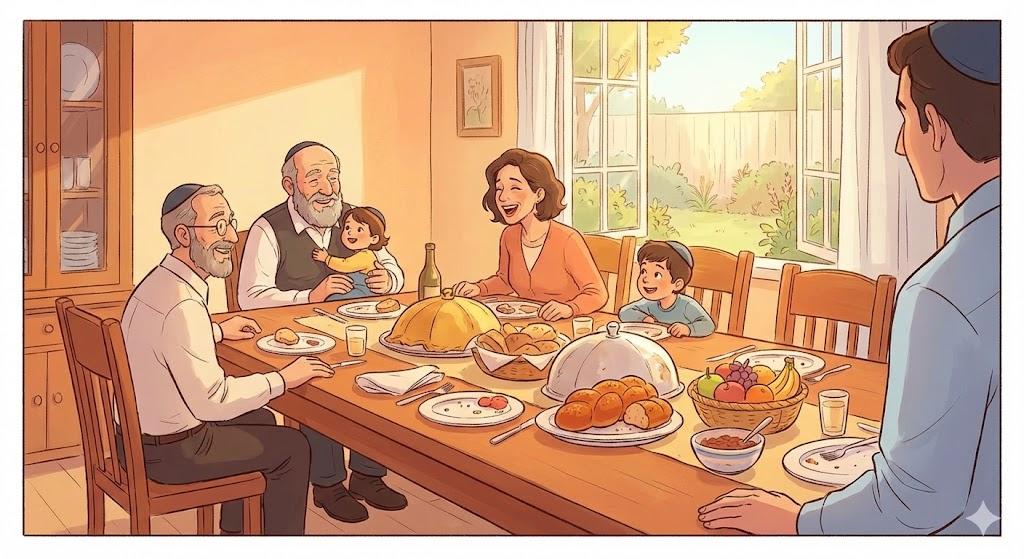
Isru Chag, day following a feast, Pessah, Shavuoth and Succoth.
The weekday following one of the three pilgrimage festivals: Sukkot, Passover, Shavuot (Isru means to bind, as if to 'bind the festival').
(“The Lord is God, and He has given us light; bind the festival offering with cords to the horns of the altar.” - Psalms 118:27. Also: “And on Isru Chag my father traveled to the land of Ashkenaz to finish his business.” - S.Y. Agnon / In the Prime of Her Life. And: “I am a proper man. I chew the cud within my soul / from the closed darkness of what happened and was, / not to forget, not to lose. Once more ‘renew our days as of old’ / once more ‘Isru Chag’, to pull the festival into one more day.” - Yehuda Amichai / The Prayers Remain Forever)
Translation
Expression (Hebrew)
אִסְרוּ חַג, איסרו חג
Definition (Hebrew)
יוֹם הַחוֹל שֶׁאַחֲרֵי אֶחָד מִשְּׁלֹשֶׁת הרְגָלִים: סֻכּוֹת, פֶּסַח, שָׁבוּעוֹת (לֶאֱסוֹר מַשְׁמָע לִקְשׁוֹר, כְּלוֹמַר כִּבְיָכוֹל "לִקְשׁוֹר אֶת הַחַג").
("אֵל ה' וַיָּאֶר לָנוּ, אִסְרוּ חַג בַּעֲבֹתִים עַד קַרְנוֹת הַמִּזְבֵּחַ" - תְּהִלִּים קי"ח כז, וְכֵן: "וּבְאִסְרוּ חַג נָסַע אָבִי לָאָרֶץ אַשְׁכְּנַז לִגְמוֹר אֶת עִסְקָיו" - ש"י עַגְנוֹן/ בִּדְמִי יָמֶיהָ, וְכֵן: "אֲנִי בֶּן אָדָם כָּשֵׁר. אֲנִי מַעֲלֶה גֵּרָה בְּנַפְשִׁי / מִן הַחֹשֶׁךְ הַסָּגוּר שֶׁל מָה שֶׁקָּרָה וְהָיָה,/ לֹא לִשְׁכֹּחַ, לֹא לְאַבֵּד. עוֹד פַּעַם "חָדָשׁ יָמֵינוּ כְּקֶדֶם"/ עוֹד פַּעַם "אִסְרוּ חַג", לִמְשֹׁךְ אֶת הַחַג לְעוֹד יוֹם" - יְהוּדָה עַמִּיחַי/ הַתְּפִלּוֹת נִשְׁאָרוֹת לָעַד)