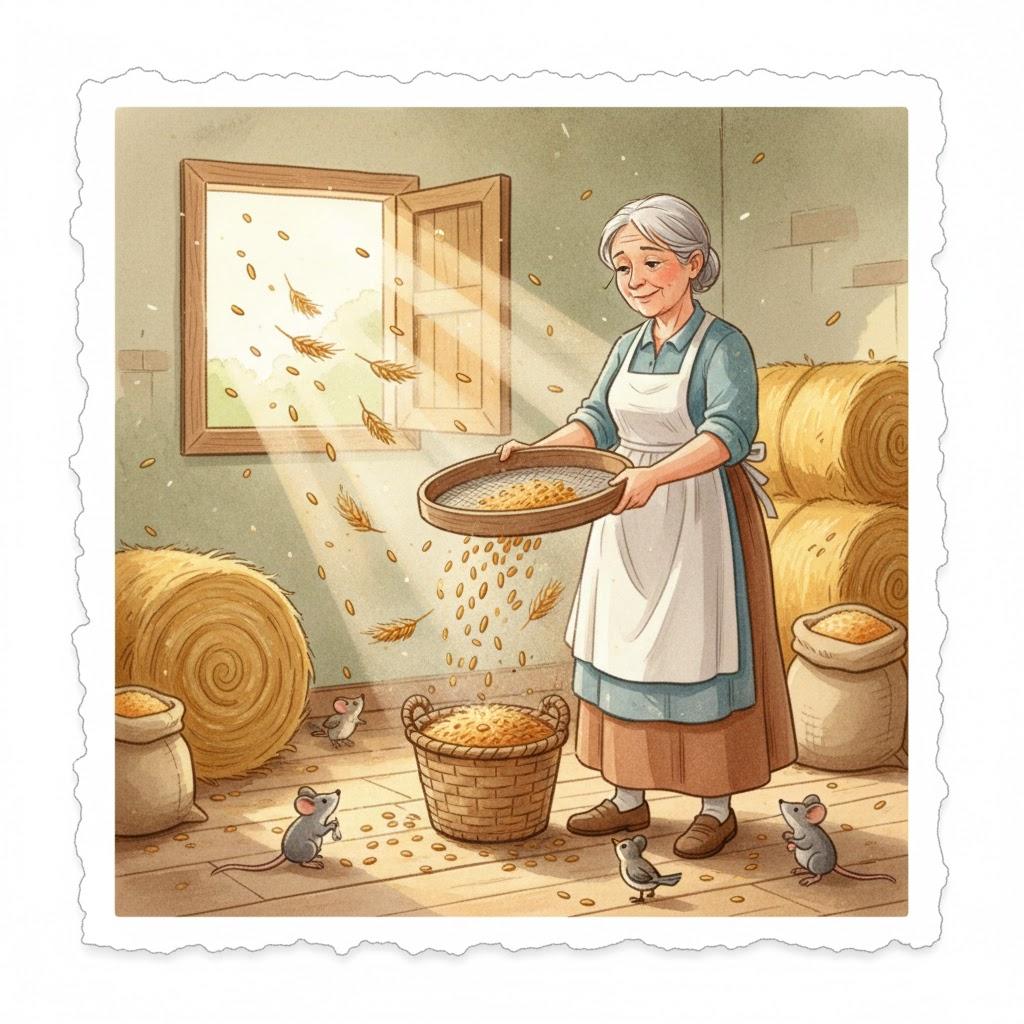
בָּרַר אֶת הַמּוֹץ מִן הַתֶּבֶן, לִבְרֹר אֶת הַבַּר מִן הַתֶּבֶן, לָבֹר אֶת הַמּוֹץ
הִפְרִיד בֵּין הַמּוֹץ לַתֶּבֶן. בְּהַשְׁאָלָה: הִפְרִיד בֵּין הַטּוֹב לָרַע אוֹ בֵּין הָעִקָּר לְטַפֵּל (מוֹץ מַשְׁמָע קְלִפּוֹת הַגַּרְעִינִים אוֹ דָּבָר הָאוֹבֵד וּמִתְכַּלֶּה מַהֵר.תֶּבֶן מַשְׁמָע הַגִּבְעוֹלִים, בַּר מַשְׁמָע גַּרְעִינֵי הַחִטָּה. הַצּוּרָה הַמְּקוֹרִית שֶׁל הַבִּטּוּי בְּהוֹשֵׁעַ יג ג:"לָכֵן יִהְיוּ כַּעֲנַן בֹּקֶר וְכַטַּל מַשְׁכִּים הֹלֵךְ כְּמֹץ יְסֹעֵר מִגֹּרֶן וּכְעָשָׁן מֵאֲרֻבָּה",וְכֵן בְּיִרְמְיָה כג כֹּחַ:"הַנָּבִיא אֲשֶׁר אִתּוֹ חֲלוֹם...מַה לַתֶּבֶן אֶת הַבָּר נְאֻם ה'").
("מַה לַתֶּבֶן אֶת הַבָּר נְאֻם ה'-וְכִי מָה עִנְיַן בַּר וְתֶבֶן אֵצֶל חֲלוֹם? אֶלָּא אָמַר רַבִּי יוֹחָנָן מִשּׁוּם רַבִּי שִׁמְעוֹן בֶּן יוֹחַי, כְּשֵׁם שֶׁאִי אֶפְשָׁר לְבַר בְּלֹא תֶּבֶן- כָּךְ אִי אֶפְשָׁר לַחֲלוֹם בְּלֹא דְּבָרִים בְּטֵלִים. אָמַר רַבִּי בֶּרֶכְיָה: חֲלוֹם, אַף עַל פִּי שֶׁמִּקְצָתוֹ מִתְקַיֵּם- כֻּלּוֹ אֵינוֹ מִתְקַיֵּם, מְנָא לַן- מִיּוֹסֵף"- בְּרָכוֹת נה ע"א, וְכֵן:"מַה לַתֶּבֶן אֶת הַבָּר (יִרְמְיָה כג ח)- כְּלוֹמַר שֶׁדִּבְרֵי הַקּוֹסְמִים וְהַחֲלוֹמוֹת כְּתֶבֶן שֶׁנִּתְעָרֵב בּוֹ מְעַט בָּר, וְדָבָר ה' כְּבָר שֶׁאֵין בּוֹ תֶּבֶן כְּלָל"- הָרַמְבָּ"ם/ סֵפֶר הַמַּדָּע, הִלְכוֹת יְסוֹדֵי תּוֹרָה, פֶּרֶק עֲשִׂירִי, ג, 94, וְכֵן:"וְנָפָה הִיא הַכְּבָרָה שֶׁמְּנִיפִין בָּהּ הַתְּבוּאָה וְאוֹתָהּ אֵינָהּ לַשָּׁוְא אֶלָּא לְבָרֵר הַבַּר מִן הַתֶּבֶן"- רָדָ"ק יְשַׁעְיָהוּ ל כֹּחַ, וְכֵן:"סַל כָּבְרֵן פְּעֻלָּה מִן כְּבָרָה מוֹץ הַתֶּבֶן הַדַּק אֵבוּס מָקוֹם שֶׁאוֹבְסִין שָׁם הַבְּהֵמוֹת אֵבוּס בְּעָלָיו"- בֵּית הַבְּחִירָה לִמְאִירִי מַסֶּכֶת שַׁבָּת קמ ע"א, וְכֵן:"הַגְּמָרָא...אָכֵן גּוֹרֶסֶת שֶׁכְּשֵׁם שֶׁאִי אֶפְשָׁר לְבַר בְּלֹא תֶּבֶן כָּךְ אִי אֶפְשָׁר לַחֲלוֹם בְּלֹא דְּבָרִים בְּטֵלִים, וְאַף עַל פִּי כֵן הַחֲלוֹם אֶחָד מִשִּׁשִּׁים לִנְבוּאָה הוּא"- ח.בְּאֵר/ אֶל מָקוֹם שֶׁהָרוּחַ הוֹלֵךְ, 58)
תרגום
ביטוי (אנגלית)
Selected / separated the chaff from the straw; to select the grain from the straw; to clear out the chaff.
הגדרה (אנגלית)
Separate the chaff from the straw — figuratively: to distinguish between good and bad, or between what is essential and what is secondary. Motz = the husks/chaff of the kernels, or something that is quickly lost and perishes. Teven = straw (the stalks). Bar = grain (the wheat kernels). Original biblical imagery: Hosea 13:3 — “like chaff blown from the threshing floor,” and Jeremiah 23:28 — “What has straw to do with grain, says the Lord?”
(“What has straw to do with grain, says the Lord? — And what do grain and straw have to do with a dream? Rather, Rabbi Yoḥanan said in the name of Rabbi Shimon ben Yoḥai: Just as it is impossible to have grain without straw, so it is impossible to have a dream without meaningless elements. Rabbi Berekhya said: A dream—even though part of it is fulfilled—does not entirely come true. From where do we learn this? From Joseph.” (Berakhot 55a) “And likewise: ‘What has straw to do with grain’ (Jeremiah 23:28) — that is, the words of diviners and dreams are like straw mixed with a little grain, whereas the word of the Lord is like pure grain with no straw at all.” (Maimonides, Mishneh Torah, Book of Knowledge, Foundations of the Torah 10:3) “And a winnowing sieve is the tool with which the produce is shaken; it is not for nothing, but to separate the grain from the straw.” (Radak on Isaiah 30:24) “‘Basket of siftings’ — an expression derived from ‘sieve’; chaff and fine straw; a feeding trough — a place where animals are fed, a manger and its contents.” (Meiri on Shabbat 140a) “And the Gemara indeed reads: Just as it is impossible for grain without straw, so it is impossible for a dream without idle elements; and nevertheless, a dream is one-sixtieth of prophecy.” (H. Be’er, To the Place Where the Wind Goes, p. 58))