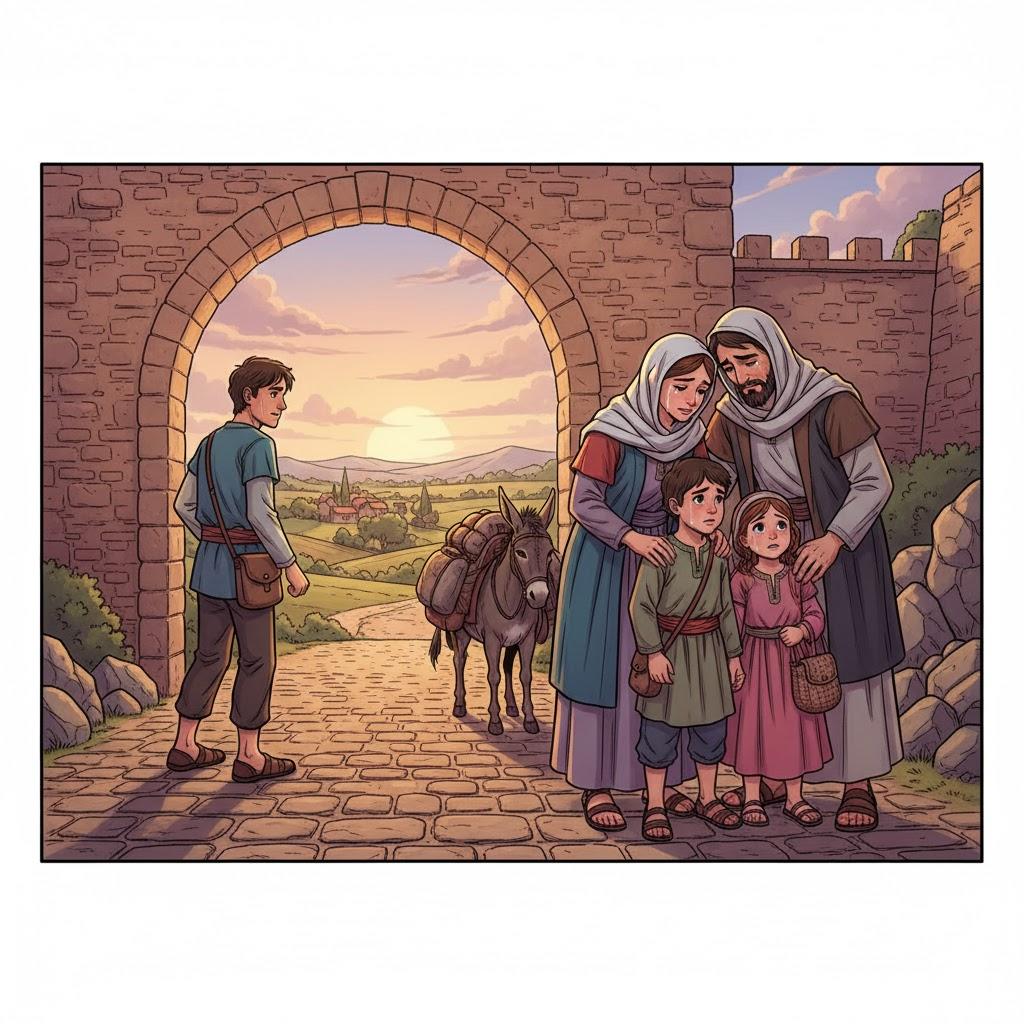
אֶחָד מֵעִיר וּשְׁנַיִם מִמִּשְׁפָּחָה
בִּמְלִיצָה בְּהַשְׁאָלָה: שְׁאֵרִית הַפְּלִיטָה. מְתֵי מְעַט.
("שׁוּבוּ בָנִים שׁוֹבָבִים נְאֻם ה' כִּי אָנֹכִי בָּעַלְתִּי בָכֶם וְלָקַחְתִּי אֶתְכֶם אֶחָד מֵעִיר וּשְׁנַיִם מִמִּשְׁפָּחָה וְהֵבֵאתִי אֶתְכֶם צִיּוֹן"- יִרְמְיָה ג יָד, וְכֵן:"מִי יוֹדֵעַ אִם יַשְׁאִירוּ מֵאִתָּנוּ הַנְּעוּרִים אֶחָד בָּעִיר וּשְׁנַיִם בַּמִּשְׁפָּחָה. וְאִם יַשְׁאִירוּ...הַאִם יוּכְלוּ לִחְיוֹת כְּאִלּוּ לֹא קְרָב דָּבָר?"- ח. בְּרֵנֶר/ מִכְתָּב אָרֹךְ שָׁלַח לִי).
תרגום
ביטוי (אנגלית)
One from a city and two from a family
הגדרה (אנגלית)
Figuratively: the surviving remnant; a very small number.
("Return, O backsliding children, says the Lord; for I am married unto you, and I will take you one from a city and two from a family, and I will bring you to Zion" – Jeremiah 3:14; and "Who knows if they will leave of us youth, one in a city and two in a family. And if they do... will they be able to live as if nothing happened?" – H. Brenner, Send Me a Long Letter).