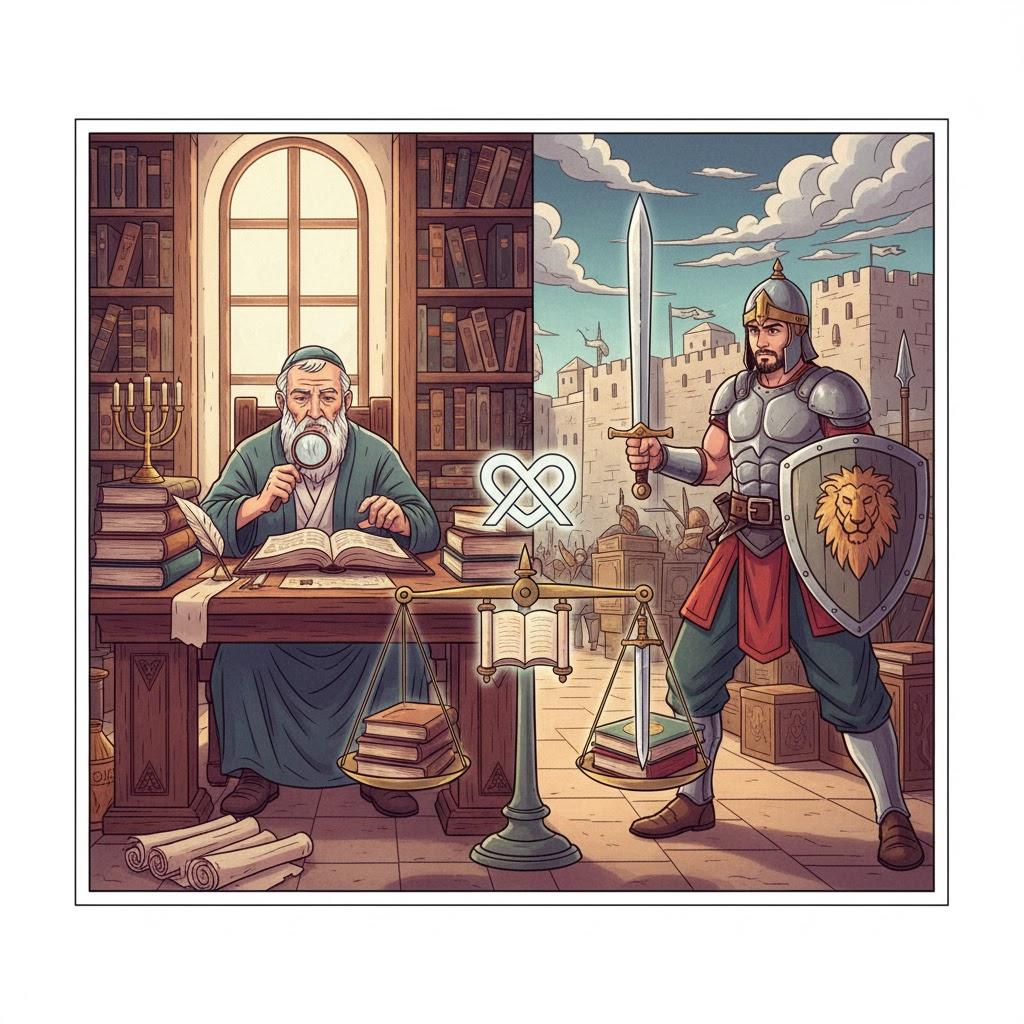
אִי סַיָּפָא לָא סָפְרָא, אִי סָפְרָא לָא סַיָּפָא / אוֹ סָפְרָא אוֹ סַיָּפָא (אִי סַיָּיפָא לָא סָפְרָא)
אִם אַתָּה אוֹחֵז חֶרֶב אֵינְךָ אִישׁ סֵפֶר, וְאִם אִישׁ סֵפֶר אַתָּה הֲרֵי שֶׁאֵינְךָ אִישׁ חֶרֶב. בְּהַשְׁאָלָה: אַנְשֵׁי רוּחַ בְּדֶרֶךְ כְּלָל אֵינָם אַנְשֵׁי מִלְחָמָה הָאוֹחֲזִים בְּעַצְמָם בְּנֶשֶׁק.
("אָמְרוּ: מַאי טַעֲמָא תִּנֵּית, וּמַאי טַעֲמָא גָּנַבְתָּ? אָמַר לְהוֹ: אִי סַיָּפָא לָא סָפְרָא, וְאִי סָפְרָא לָא סַיָּפָא" - עֲבוֹדָה זָרָה יז ע"ב)
תרגום
ביטוי (אנגלית)
If he is a writer (scholar), he is no warrior; if a warrior, no writer (scholar)
הגדרה (אנגלית)
If you wield a sword, you are not a man of books; if you are a man of books, you are not a man of the sword. Figuratively: Intellectuals are generally not warriors who bear arms themselves.
("They said to him: Why did you study, and why did you steal? He replied: If one is a warrior, he is not a scholar; and if a scholar, not a warrior" – Avodah Zarah 17b)