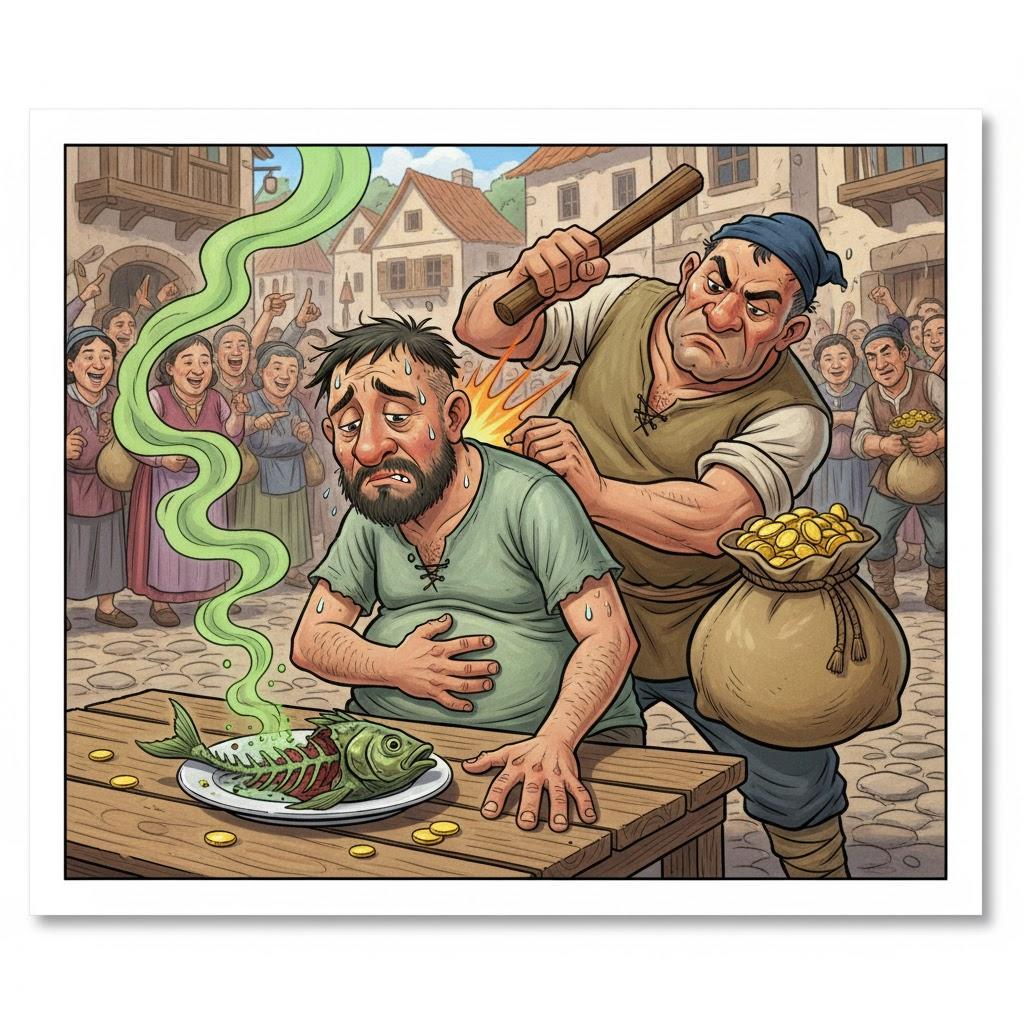
Eats a stinking fish, gets whipped, and pays a hundred maneh
Figuratively: punished with every possible punishment. Foolishness that leads to all the worst possible outcomes. (The proverb is based on the story of a servant who brought his master a stinking fish from the market. The master ordered him to choose one of three punishments: eat the fish, be whipped a hundred times, or pay a hundred maneh — an ancient coin. The servant chose to eat the fish, but midway through he could not bear the taste, so he opted for the lashes. After receiving sixty lashes, he regretted it again and chose to pay the hundred maneh — thus suffering all three punishments.)
("A parable of a man who was told, 'Go bring me a fish from the market.' He brought a stinking fish. The master decreed: you must either eat the fish, receive a hundred lashes, or pay a hundred maneh. He said, 'I will eat it.' He began eating but could not finish and said, 'I will be whipped.' He received sixty or seventy lashes but could not endure, and said, 'I will pay a hundred maneh.' Thus, he ate the fish, was whipped, and paid a hundred maneh. So it was with the Egyptians — they were struck, released, and their wealth was taken." – Sekhel Tov (Buber), Exodus 14)
Translation
Expression (Hebrew)
אוֹכֵל דָּג מַבְאִישׁ, לוֹקֶה וְנוֹתֵן מֵאָה מַנֵּה
Definition (Hebrew)
בְּהַשְׁאָלָה: נֶעֱנַשׁ בְּכָל הָעֳנָשִׁים הָאֶפְשָׁרִיִּים. טִפְּשׁוּת הַמּוֹבִילָה לְכָל הַתּוֹצָאוֹת הַגְּרוּעוֹת הָאֶפְשָׁרִיּוֹת. (הַפִּתְגָּם מְבֻסָּס עַל סִּפּוּר אוֹדוֹת עֶבֶד שֶׁהֵבִיא לַאֲדוֹנָיו דָּג מַבְאִישׁ מִן הַשּׁוּק, וְגָזַר עָלָיו הָאָדוֹן שֶׁיִּבְחַר אֶחָד מִשְּׁלֹשֶׁת הָעֳנָשִׁים הָאֵלּוּ: שֶׁיֹּאכַל אֶת הַדָּג הַמַּבְאִישׁ, אוֹ שֶׁיִּלְקֶה מֵאָה מַלְקוֹת אוֹ שֶׁיְּשַׁלֵּם מֵאָה מָנֶה — סוּג שֶׁל מַטְבֵּעַ קָדוּם. הָעֶבֶד הֶעֱדִיף לֶאֱכֹל אֶת הַדָּג, אַךְ תּוֹךְ כְּדֵי אֲכִילָה לֹא יָכֹל הָיָה לַעֲמֹד בְּטַעַם הָרַע שֶׁל הַדָּג וְהִתְחָרֵט וּבָחַר לְקַבֵּל מַלְקוֹת. לְאַחַר שֶׁלָּקָה מִסְפַּר מַלְקוֹת שׁוּב הִתְחָרֵט וּבָחַר לְשַׁלֵּם מֵאָה מָנֶה. מִכָּאן, שֶׁנֶּעֱנַשׁ בְּכָל סוּגֵי הָעֳנָשִׁים).
("מָשָׁל לָאָדָם שֶׁאָמְרוּ לוֹ צֵא וְהַבָּא לִי דָּג מִן הַשּׁוּק, יָצָא וְהֵבִיא לוֹ דָּג מַבְאִישׁ, אָמַר לוֹ בִּגְזֵרָה שֶׁתֹּאכַל אֶת הַדָּג, אוֹ שֶׁתִּלְקֶה מֵאָה מַכּוֹת, אוֹ שֶׁתִּתֵּן מֵאָה מָנָה, אָמַר הֲרֵינִי אֹכֶל, הִתְחִיל לֶאֱכֹל וְלֹא הִסְפִּיק לִגְמֹר עַד שֶׁאָמַר הֲרֵינִי לוֹקֶה, הִתְחִיל לִלְקוֹת ס' אוֹ ע' מַלְקוּת וְלֹא הִסְפִּיק לִגְמֹר עַד שֶׁאָמַר הֲרֵינִי נוֹתֵן מֵאָה מָנָה, נִמְצָא אֹכֶל אֶת הַדָּג, וְלוּקָה, וְנוֹתֵן מֵאָה מָנָה, כָּךְ עֵשָׂו לְמִצְרַיִם לְקַו וְשֶׁלְּחוּם וְנוֹטֵל מָמוֹנָם"- שֵׂכֶל טוֹב (בּוּבֶּר) שְׁמוֹת פֶּרֶק יָד)