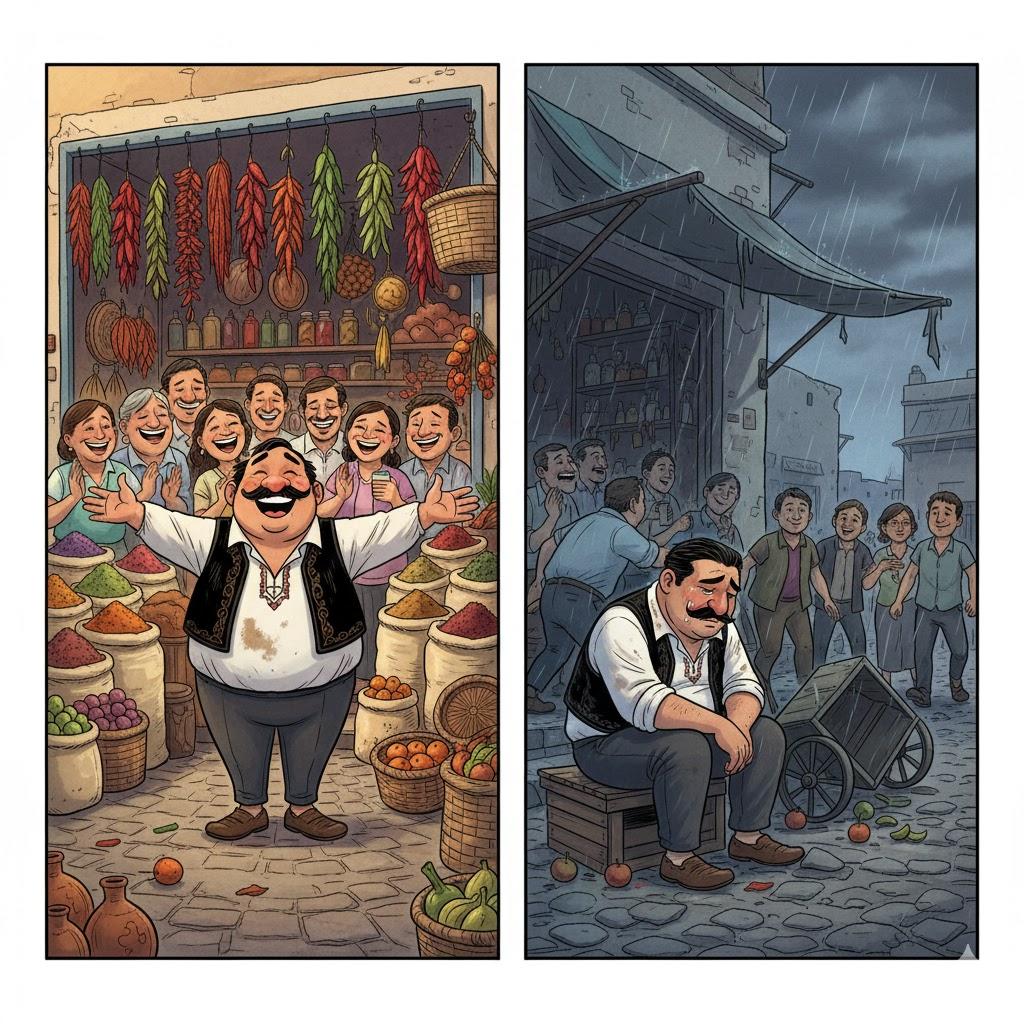
אַבַּב חַנְוָאתָא נְפִישִׁי אַחֵי וּמְרַחֲמֵי, אַבַּב בִּזְיּוֹנֵי - לָא אַחֵי וְלָא מְרַחֲמֵי
עַל פֶּתַח חֲנוּיוֹת הַמָּזוֹן מְרֻבִּים הָאַחִים וְהָאוֹהֲבִים; עַל פֶּתַח בֵּית הָאֲסוּרִים אֵין אוֹהֲבִים וְאֵין אַחִים. בְּהַשְׁאָלָה: אוֹהֲבֵי הֶעָשִׁיר רַבִּים, כִּי הֵם מְצַפִּים לְמַתְּנוֹתָיו וּלְתוֹעֶלֶת מִמֶּנּוּ, אַךְ בְּעֵת צָרָה וְקָלוֹן – אֵין עוֹמֵד עִמּוֹ אִישׁ.
("רַב פַּפָּא אָמַר: אַבָּב חַנְוָאתָא נְפִישִׁי אַחֵי וּמְרַחֲמֵי, אַבֵּב בְּזִיּוּנִי – לָא אַחֵי וְלָא מְרַחֲמֵי." – תַּלְמוּד בָּבְלִי, שַׁבָּת לֵב ע"א)
תרגום
ביטוי (אנגלית)
At the Storefront, Many Are My Brothers and Friends; at My Disgrace—Neither Brothers nor Friends
הגדרה (אנגלית)
At the entrance to a food shop, there are many “brothers” and “friends”; but at the entrance to disgrace or hardship—none remain. Figuratively: The wealthy or successful have many friends who seek benefit, but in times of misfortune or shame, those friends disappear.
("Rav Pappa said: At the entrance to the food shop, my brothers and friends abound; at the entrance to my disgrace—there are neither brothers nor friends." — Babylonian Talmud, Shabbat 32a)