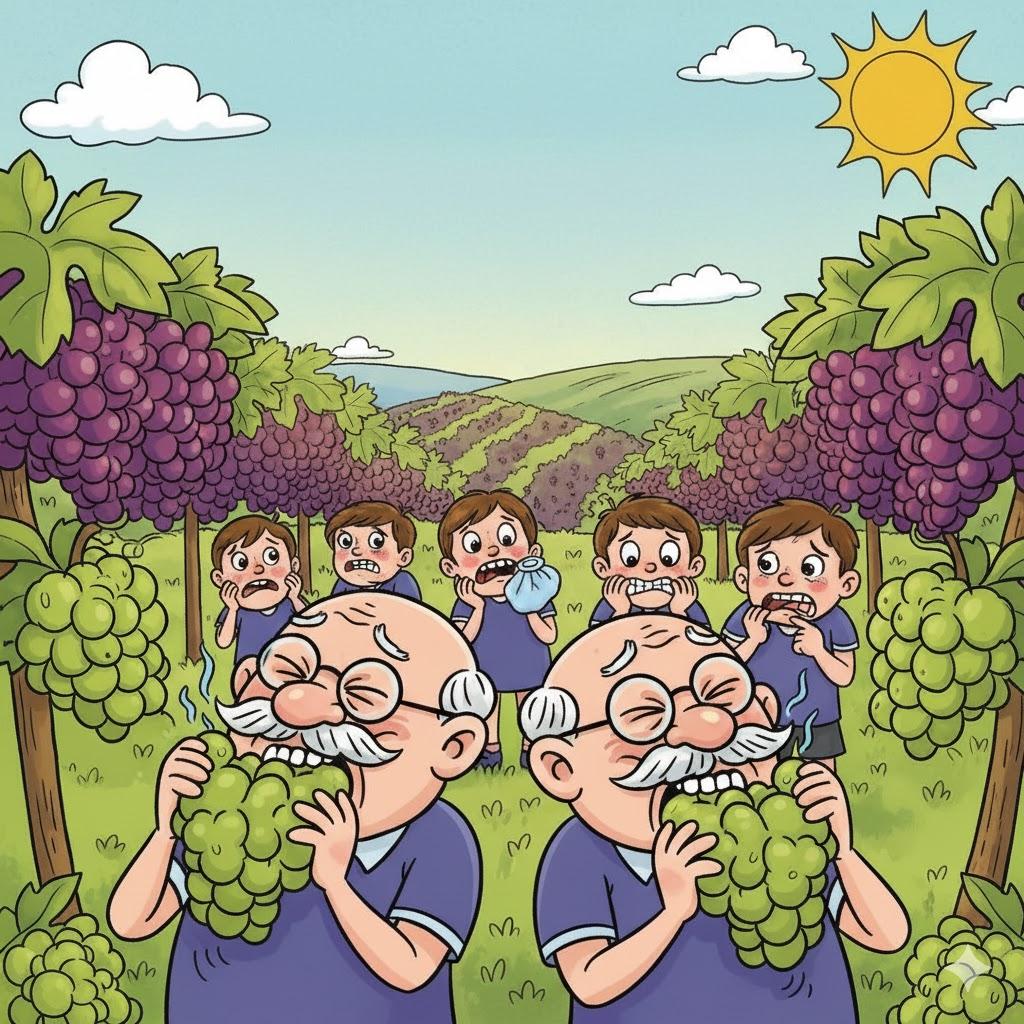
אָבוֹת אָכְלוּ בֹּסֶר וְשִׁנֵּי בָּנִים תִּקְהֶינָה?!
בְּהַשְׁאָלָה: הֲיִתָּכֵן שֶׁאָדָם יֵעָנֵשׁ בִּגְלַל חֲטָאֵי אָבִיו אוֹ חֲטָאֵי אָדָם אַחֵר?! (כְּשֵׁם שֶׁלֹּא יִתָּכֵן שֶׁהַבֵּן יִנָּזֵק בְּשִׁנָּיו בִּגְלַל פֵּרוֹת בֹּסֶר שֶׁאָכַל הָאָב. קֵהֶה מַשְׁמָע חֲסַר חַדּוּת).
("בַּיָּמִים הָהֵם לֹא יֹאמְרוּ עוֹד אָבוֹת אָכְלוּ בֹסֶר וְשִׁנֵּי בָנִים תִּקְהֶינָה" – יִרְמְיָה ל"א כ"ח)
תרגום
ביטוי (אנגלית)
“The fathers have eaten sour grapes, and the children's teeth are set on edge?!”
הגדרה (אנגלית)
By extension: Is it possible that a person should be punished for the sins of his father or of another person?! (Just as it is impossible for the son’s teeth to be blunted because his father ate unripe fruit — “set on edge” meaning dulled or numbed.)
(“In those days they shall no longer say, ‘The fathers have eaten sour grapes, and the children’s teeth are set on edge.’” – Jeremiah 31:28)