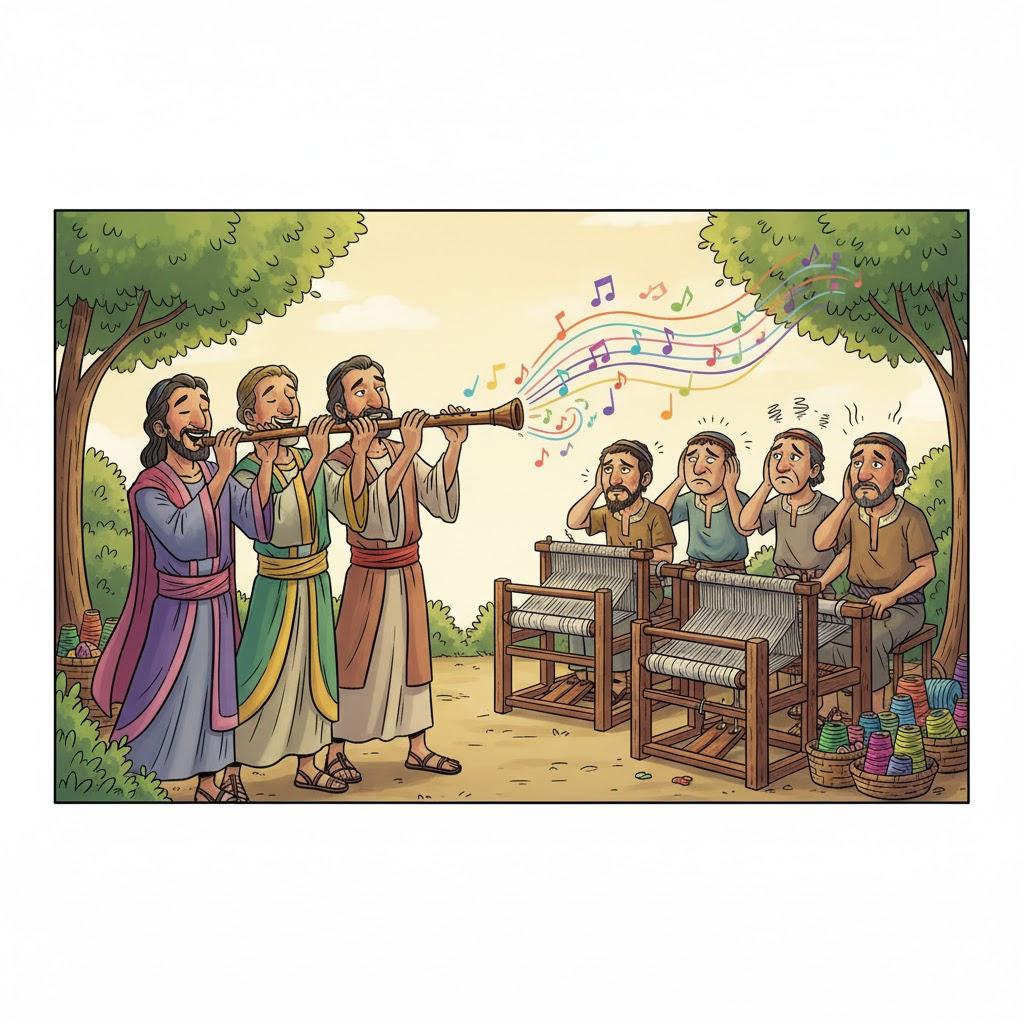
אַבּוּב לַחֲרֵי־זֶמֶר, לְגַרְדָּאֵי לָא מְקַבְּלוּהִי מִינֵּיהּ
הֶחָלִיל טוֹב לְשָׂרִים וּמְזַמְּרִים אַךְ אֵינוֹ מִתְקַבֵּל עַל יְדֵי הָאוֹרְגִים. בְּהַשְׁאָלָה: מָה שֶׁכָּשֵׁר בְּעֵינֵי הַגְּדוֹלִים אֵינוֹ מִתְקַבֵּל עַל יְדֵי הַפְּחוּתִים, שֶׁאֵין טַעְמָם שָׁוֶה.
("מַאי קְרִיאַת הַגֶּבֶר – קְרָא גַּבְרָא. אֲמַר לֵהּ רַבִּי שֵׁילָא: וְלֵימָא מָר קְרָא תַּרְנְגוֹלָא! אָמַר לֵהּ: אַבּוּב לְחֹרִי־זֶמֶר, לְגַרְדָּאֵי לָא מְקַבְּלוּהּ מִנֵּהּ" – יוֹמָא כ ע"ב)
תרגום
ביטוי (אנגלית)
A flute for musicians, but not accepted by weavers
הגדרה (אנגלית)
The flute is pleasant to musicians and singers but not accepted by the weavers. Figuratively: What pleases the great or refined is not appreciated by the simple or unrefined; tastes differ.
(“What is meant by ‘the call of the man’? He called a person. Rabbi Sheila said to him: Let the master say, he called a rooster! He replied: A flute is for musicians, but the weavers do not accept it.” – Yoma 20b)