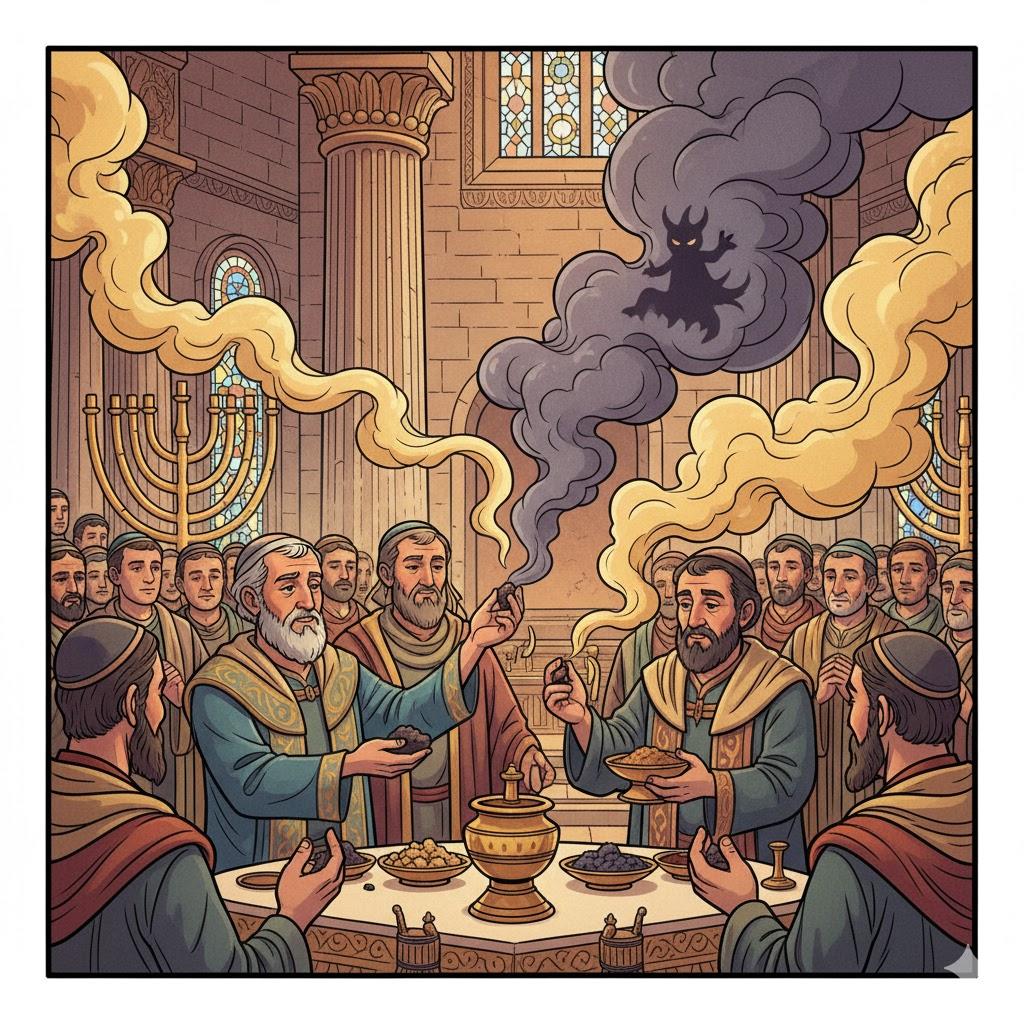
אֵין קְטֹרֶת בְּלִי חֶלְבּוֹנָהּ
כָּל תַּעֲרֹבֶת בַּשָּׁמַיִם שֶׁל קְטֹרֶת בַּבַּיִת הַמִּקְדָּשׁ כָּלְלָה גַּם אֶת עֵשֶׂב הֵחֶלְבּוֹנָהּ שֶׁרֵיחוֹ אֵינוֹ נָעִים. בְּהַשְׁאָלָה: אֵין טוֹב מֻחְלָט לְלֹא חִסָּרוֹן מְסֻיָּם (חֶלְבּוֹנָהּ הָיָה אֶחָד מִסַּמְמָנִי הַקְּטֹרֶת בַּבַּיִת הַמִּקְדָּשׁ וְרֵיחוֹ הָיָה רַע).
("חַלְבָנָהּ- בְּשֵׁם שֶׁרֵיחוֹ רַע וְקוֹרִין לוֹ גַּלְבְּנָא, וּמִנָּאֶה הַכָּתוּב בֵּין סַמָּנִי הַקְּטֹרֶת, לְלַמְּדֵנוּ, שֶׁלֹּא יָקֵל בְּעֵינֵינוּ לְצָרֵף עַמֵּנוּ בַּאֲגֻדַּת תַּעֲנִיּוֹתֵינוּ וְתִפְלוֹתֵינוּ אֶת פּוֹשְׁעֵי יִשְׂרָאֵל שֶׁיִּהְיוּ נְמַנֵּן עַמֵּנוּ"- רָשִׁ"י שֵׁמוֹת ל לד, וְכֵן: "וְזֶה בְּחִינַת קטורת שֶׁהָיוּ בָּהֶם חֶלְבּוֹנָהּ דְּהַיְנוּ שֶׁמְּבָרְרִין וּמוֹצְאִין הַטּוֹב אֲפִלּוּ בְּפוֹשְׁעֵי יִשְׂרָאֵל בִּבְחִינַת חֶלְבּוֹנָהּ, וּכְמוֹ שֶׁלָּמְדוּ רז"ל מִזֶּה ...כִּי עִקַּר הַתְּפִלָּה בִּבְחִינַת קטורת עַל יְדֵי שֶׁמְּבָרְרִין וּמוֹצְאִין נקודות טובות אֲפִלּוּ בְּפוֹשְׁעֵי יִשְׂרָאֵל בִּבְחִינַת חֶלְבּוֹנָהּ כַּנַ"ל"- רַבִּי נָתָן שְׁטֵרְנְהֵרְץ/ לִקּוּטֵי הֲלָכוֹת השכמת הַבֹּקֶר, ה)
תרגום
ביטוי (אנגלית)
There is no incense without galbanum
הגדרה (אנגלית)
Every mixture of spices for the incense in the Temple included the herb galbanum, which has an unpleasant scent. Figuratively: there is no absolute good without some flaw (galbanum was one of the ingredients of the incense in the Temple, and its smell was bad).
("Galbanum—whose name is associated with a bad smell and which is called galbana, and the Torah counts it among the incense ingredients, to teach us not to treat lightly the inclusion of the sinners of Israel in our fasts and prayers, that they should be counted with us"—Rashi, Exodus 30:34. Similarly: "This is the aspect of incense, which contained galbanum; that is, finding and clarifying the good even in the sinners of Israel, in the aspect of galbanum. As our sages learned from this: any prayer that does not include the prayers of the sinners of Israel is not a prayer, because the essence of prayer is like incense, by finding good points even in the sinners of Israel, in the aspect of galbanum"—Rabbi Natan Sternhartz, Likutey Halakhot, The Morning Wake-Up, 5.)