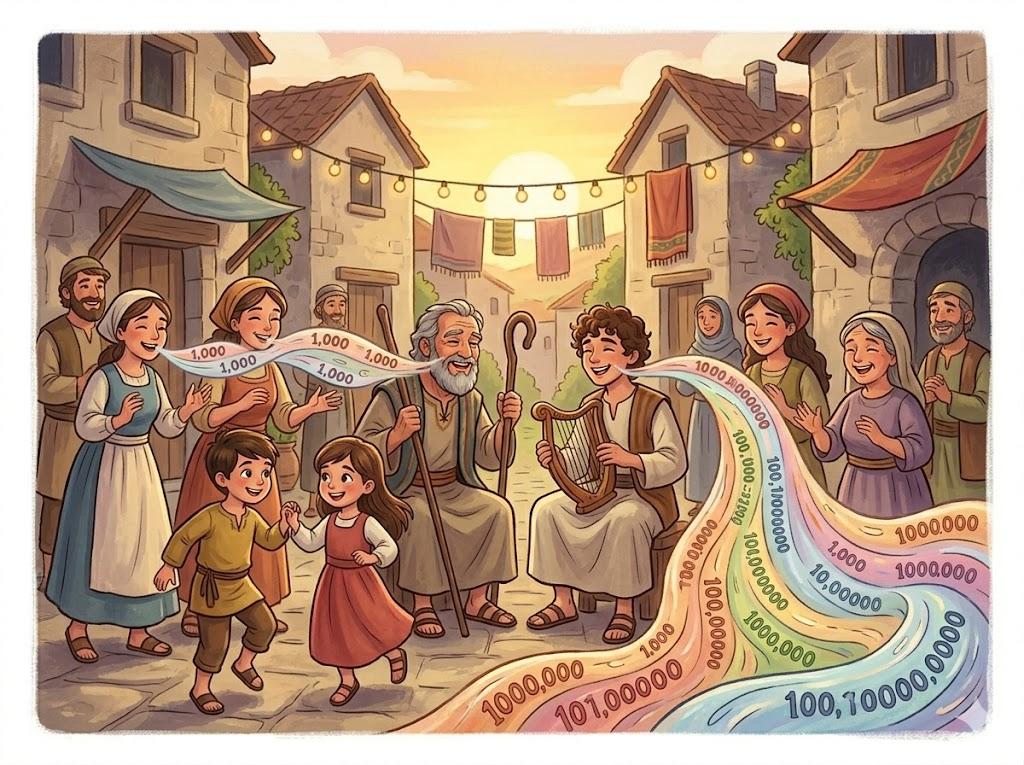
הִכָּה שָׁאוּל בַּאֲלָפָיו וְדָוִד בְּרִבְבֹתָיו
בִּמְלִיצָה בְּהַשְׁאָלָה: הַנִּצָּחוֹן הָיָה מַזְהִיר. אוֹ: הַצְלָחַת הַמַּצְבִּיאִים הַצְּבָאִיִּים הָיְתָה רַבָּה, כָּל אֶחָד יוֹתֵר טוֹב מֵהַשֵּׁנִי (בַּמָּקוֹר הַכַּוָּנָה שֶׁשָּׁאוּל וְדָוִד הִכּוּ בְּאַלְפֵי וְרִבְבוֹת חַיָּלֵיהֶם)
("וַתַּעֲנֶינָה הַנָּשִׁים הַמְשַׂחֲקוֹת וַתֹּאמַרְןָ הִכָּה שָׁאוּל בַּאֲלָפָיו וְדָוִד בְּרִבְבֹתָיו"- שְׁמוּאֵל א יח ז, נְשׁוֹת הָעָם עַל דָּוִד וְשָׁאוּל)
תרגום
ביטוי (אנגלית)
Saul struck in thousands, and David in tens of thousands
הגדרה (אנגלית)
In the question: The victory was a warning. Or: The victory of the army was great, each one was better than the other (in the sense that Saul and David struck down thousands and tens of thousands of their soldiers)
("And the women who were playing the game asked us, saying, Saul has slain his thousands, and David his tens of thousands" - 1 Samuel 18:7, The women of the people about David and Saul)