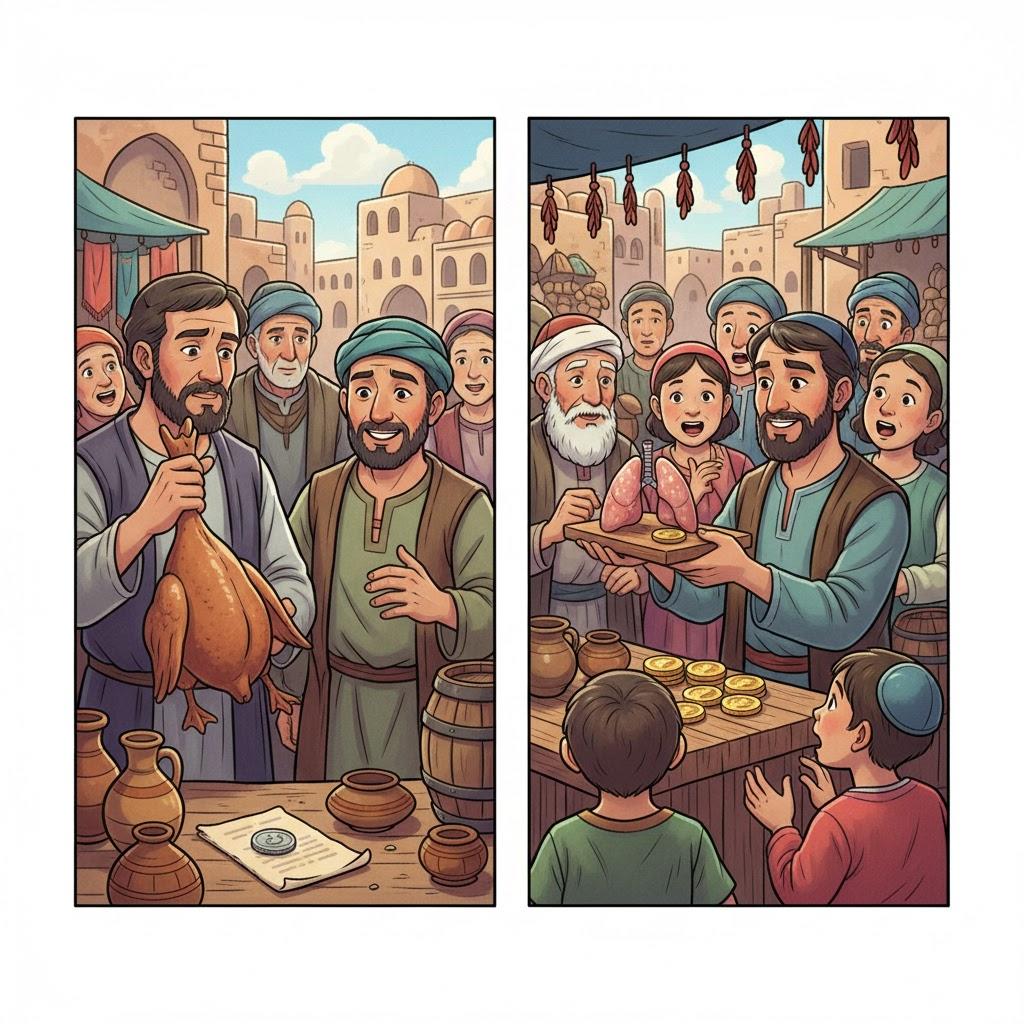
אֲוָזָא בְּזוּזָא וְרֵאָה דִּידַהּ בְּאַרְבְּעָה
הָאֲוָז נִמְכַּר בְּזוּז אֶחָד (שֵׁם מַטְבֵּעַ עַתִּיק) וְאִלּוּ הָרֵאָה שֶׁלּוֹ בְּאַרְבָּעָה זוּזִים. בְּהַשְׁאָלָה: לְעִתִּים יֶשְׁנוֹ עֵרֶךְ מוּסָף לַחֵלֶק הַקָּטָן יוֹתֵר שֶׁהִשְׁקִיעוּ בּוֹ אוֹ שֶׁיֵּשׁ לוֹ יְכוֹלוֹת יִחוּדִיּוֹת.
("לָמָּה נִקְרָא שְׁמָהּ רֵאָה – שֶׁמְּאִירָה אֶת הָעֵינַיִם. אִבְעֵיא לְהוֹ: לַאֲכִילָה, אוֹ ע"י סַמְּנִין? ת"ש, דְּאָמַר רַב הוּנָא בַּר יְהוּדָה: אֲוָזָא – בְּזוּזָא, וְרֵאָה דִּדָּה – בְּאַרְבָּעָה, וְאִי ס"ד לַאֲכִילָה, לִנָּקֵט בְּזוּזָא וּלְיָכוֹל!" – חֻלִּין מָט ע"א)
תרגום
ביטוי (אנגלית)
A goose for one zuz, and its lung for four
הגדרה (אנגלית)
The goose is sold for one zuz, but its lung for four. Figuratively, sometimes a smaller or seemingly insignificant part has greater value due to special qualities or effort invested in it.
(“Why is it called the lung? Because it enlightens the eyes. They wondered: for eating, or by means of remedies? Come and hear: Rav Huna bar Yehuda said, ‘A goose is worth one zuz, but its lung four!’ If it were for eating, let him buy the goose for one zuz and eat it!” – Chullin 49a)