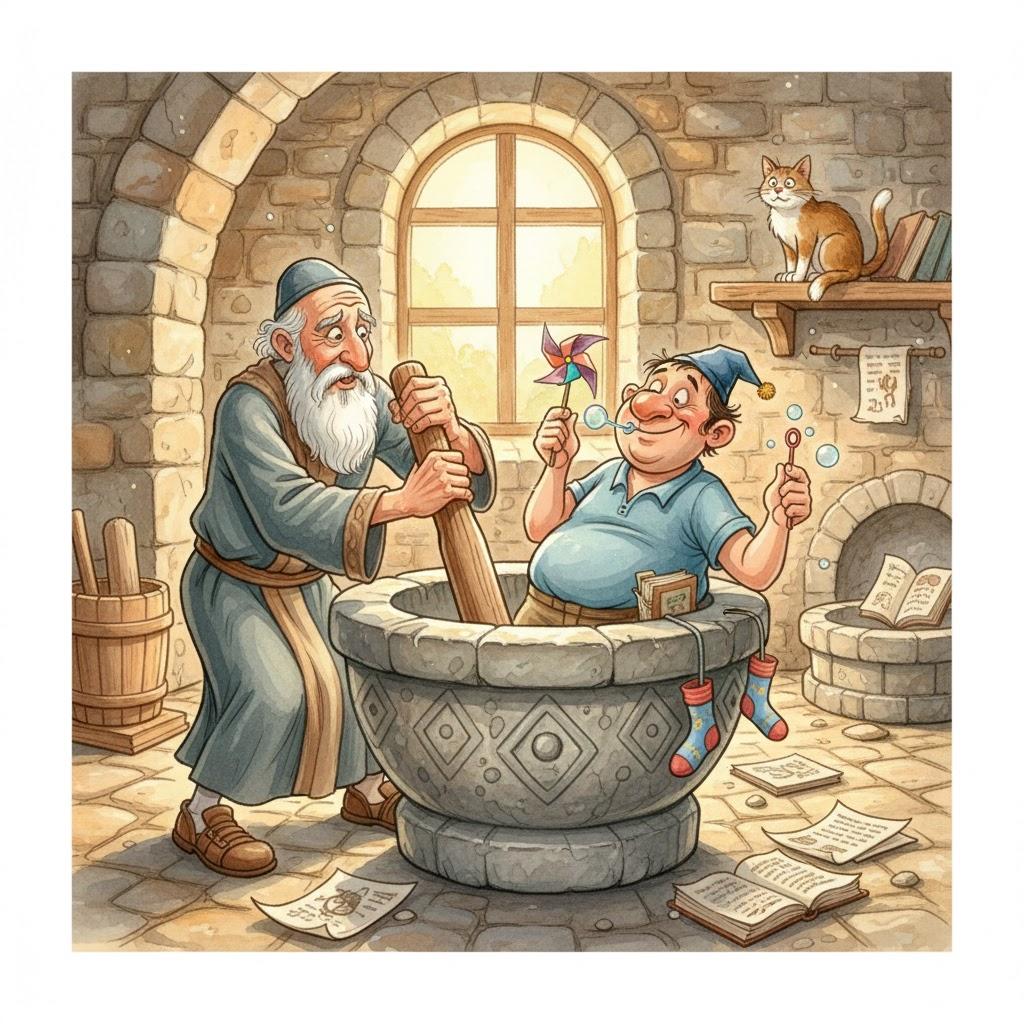
גַּם אִם תִּכְתּוֹשׁ אֶת הָאֱוִיל לֹא תָסוּר מֵעָלָיו אִוַּלְתּוֹ
פִּתְגָּם לְפִיו אֵין תַּקָּנָה לַטִּפֵּשׁ וּמַצָּבוֹ בִּלְתִּי נִתָּן לְשִׁנּוּי. "אִם מִישֶׁהוּ טִפֵּשׁ- זֶה לְהַרְבֵּה זְמַן".
("אִם תִּכְתּוֹשׁ אֶת הָאֱוִיל בַּמַּכְתֵּשׁ בְּתוֹךְ הָרִיפוֹת בַּעֱלִי לֹא תָסוּר מֵעָלָיו אִוַּלְתּוֹ"- מִשְׁלֵי כז כב, וְכֵן:"וּקְצָת מִן הַיָּפוֹת/ תִּהְיֶינָה בַּטֶּבַע נוֹאֲפוֹת/ לֹא תָּסוּר מֵעֲלֵיהֶם אִוַּלְתָּם, אִם תִּכְתְּשֵׁם בְּתוֹךְ הָרִיפוֹת"- עִמָּנוּאֵל הָרוֹמִי (הַמֵּאָה הי"ג)/ צִנְצֶנֶת הַמָּן וְעֵגֶל יָרָבְעָם)
תרגום
ביטוי (אנגלית)
Though you bray a fool in a mortar with a pestle, his foolishness will not depart from him
הגדרה (אנגלית)
A proverb stating that a fool’s nature cannot be corrected or changed. "If someone is foolish, it is for a long time."
(“If you crush a fool in a mortar, among the crushed grain with a pestle, his foolishness will not depart from him.” — Book of Proverbs 27:22 And likewise: “And some of the fair ones will by nature be adulterous; their foolishness will not depart from them, even if you crush them among the crushed grain.” — Immanuel of Rome, Tzintzenet HaMan ve-Egel Yarovam)