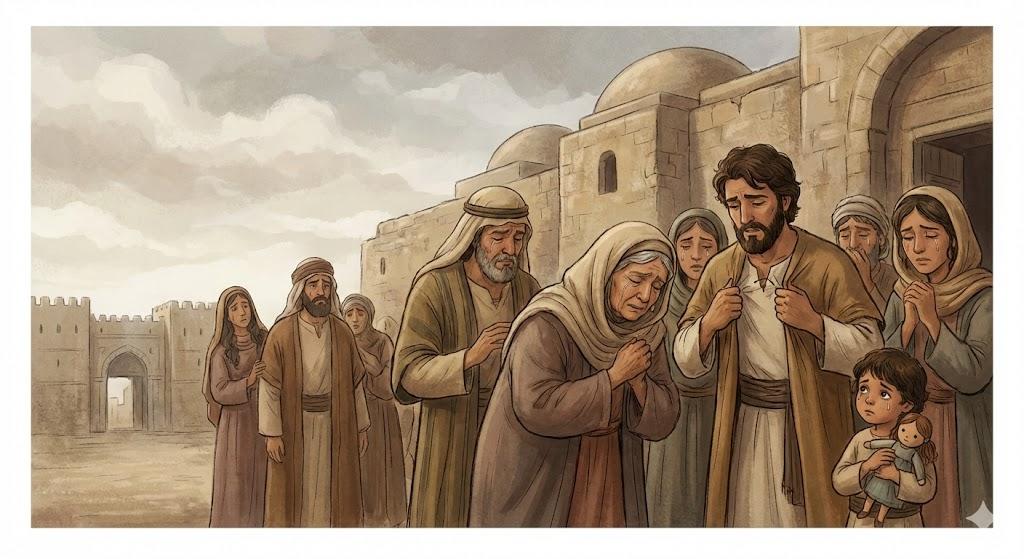
בֶּכִי וּנְהִי
בֶּכִי וְקִינָה. בְּהַשְׁאָלָה: יַלְלָנוּת (נְהִי מַשְׁמָע קִינָה).
("כֹּה אָמַר ה', קוֹל בְּרָמָה נִשְׁמָע נְהִי בְּכִי תַמְרוּרִים רָחֵל מְבַכָּה עַל בָּנֶיהָ מֵאֲנָה לְהִנָּחֵם עַל בָּנֶיהָ כִּי אֵינֶנּוּ" – יִרְמְיָה לֹא יָד, וְכֵן: "עַל הֶהָרִים אֶשָּׂא בְכִי וָנֶהִי וְעַל נְאוֹת מִדְבָּר קִינָה, עַל אוֹתָם הָרִים נָאִים וּמְשֻׁבָּחִים אֶשָּׂא בְּכִי וּנְהִי, עַל נְאוֹתָיו שֶׁל יַעֲקֹב שֶׁנֶּהֶפְכוּ לְקִינָה" – אֵיכָה רַבָּה (וִילְנָא) פְּתִיחְתּוֹת)
תרגום
ביטוי (אנגלית)
Weeping and wailing
הגדרה (אנגלית)
Crying and lamentation. By extension: lamenting or wailing (nehí means lament).
(“Thus says the Lord: A voice is heard in Ramah, weeping and bitter lamentation; Rachel weeps for her children, refusing to be comforted for her children, because they are not” – Jeremiah 31:14; and likewise: “On the mountains I will lift up weeping and wailing, and in the desert pastures a lamentation; upon those beautiful and distinguished mountains I will lift up weeping and wailing, over the pastures of Jacob that have been turned to lamentation” – Eikhah Rabbah, Vilna edition, Petiḥot)